

Why two maximum apertures?
Why is it that some lenses have two maximum apertures while others have only one?
Abhyankar Patil, Nagpur
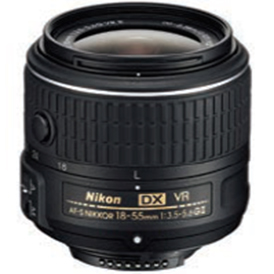
You will only find two maximum apertures on some zoom lenses. Zoom lenses incorporate multiple focal lengths, as opposed to Prime lenses that have a single focal length. However, there are also zoom lenses that have only one maximum aperture – for example, 70- 200mm f/2.8. Such lenses are also referred to as ‘constant aperture zooms’. An example of a zoom lens having two maximum apertures is 18-55mm f/3.5-5.6. This means that at the 18mm setting, the lens’ widest aperture is f/3.5 whereas at the other end (55mm in this case), the lens’ widest aperture is f/5.6.
Now, you may ask, what is the need for having two maximum apertures? The short answer is, to keep the cost low. If the 18-55mm f/3.5-5.6 lens (or any other variable aperture zoom lens) was made with a constant maximum aperture (like f/2.8), the cost might almost double!
Depth of Field Issues?
 I love landscape photography. I know that small apertures provide greater depth of field. Even when I use f/16 (which is the smallest opening on my 50mm lens), I still do not get that front-to-back sharpness that I see in many other landscape images. What am I doing wrong?
Arun P. S., Assam
It seems to me that the issue lies not in your selection of the aperture, but where exactly you focus. For a landscape, where do you focus?
Do you focus your lens at infinity? If so, that would not be ideal. Even with a very narrow aperture, the foreground area will not be sharp enough.
If you focus mid-way into the scene, that would be wrong too (though you may have comparatively better sharpness in the foreground area).
For a general landscape, try focussing about 1/3rd into the scene, along with a narrow aperture like f/11 or f/16.
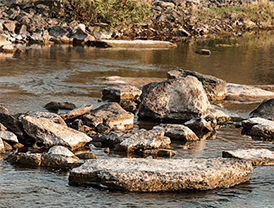
 If you are very close to an interesting foreground element (a rock, a stump of an old tree etc), try positioning your camera (preferably with a super-wide-angle lens) very close to that element, tilt the camera slightly towards the ground, focus sharply on the foreground element and then shoot at f/16 (see image below). The foreground element will be exaggerated in size but will lead the viewer’s eye into the picture. Depending on where exactly you have focussed, the extreme background may not have the same degree of sharpness as the point where you have focussed, but this appears natural to our eyes.
A Tilt & Shift lens could also be used to create stunning foreground to background sharpness. |SP